26 Feb 2026
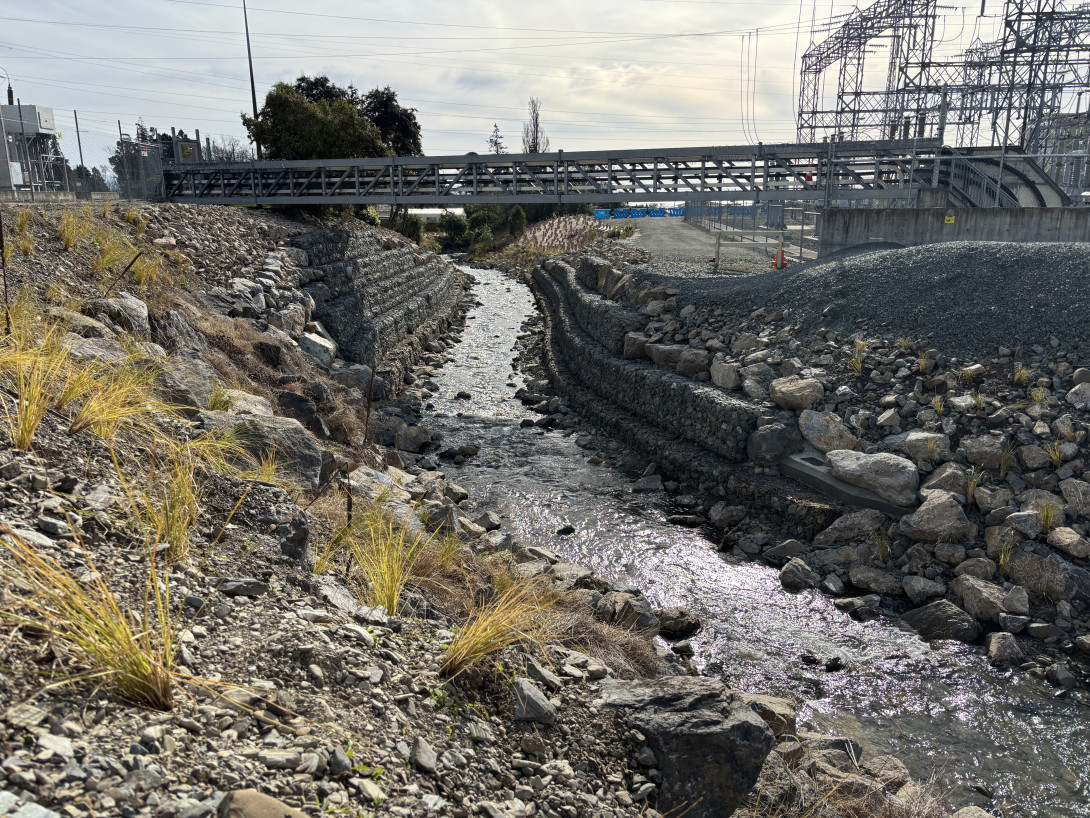
Work completed last year to boost flood protection at Transpower’s Stoke Substation helped ensure electricity supply into Nelson-Tasman was uninterrupted through the serious flood events in 2025.
It also improved the habitat in a stream passing through the site for half a dozen nationally threatened or at-risk fish species, proving that conservation and essential infrastructure can go hand-in-hand. Transpower Executive General Manager Grid Delivery Mark Ryall said work at the site was necessary to begin the process of bringing the substation up to Transpower's flood mitigation requirements to boost reliability of electricity supply in the region.
“The work was designed to ensure the substation can continue to operate through major floods. This was tested last year when the substation came through the terrible storms and flooding in June without any issues,” he said.
“Importantly, the project also gave us the opportunity to work with local mana whenua and the Department of Conservation to improve the habitat for species living in the stream that have high cultural and ecological value.
“It’s a great example of how development of infrastructure critical to a resilient electricity supply for Kiwis can go hand-in-hand with protecting and enhancing our natural environment”.
The Stoke Substation connects Transpower’s national high-voltage electricity transmission grid with Network Tasman’s local lines network and forms a critical part of the electricity system for people in the Nelson-Tasman region. After the Nelson floods in 2022, streambanks running through the site suffered significant erosion, making work to reinforce the electrical assets against future damage critical.
When the region flooded again in June 2025, the work that had been undertaken to reinforce the site against weather-related damage paid dividends. The streambanks suffered no further erosion and the equipment on site came through the storm unscathed.
The stream is home to a diverse population of fish, including Lamprey, Short-jaw Kōkopu, koaro, Giant Kōkopu, Inanga, and Longfin eels. Lamprey and Short-jaw Kōkopu are classed as threatened and nationally vulnerable, while the remaining four species are deemed at-risk declining.
To ensure a sustainable future for these fish species, the team planned their work around fish migration and breeding.
"Transpower has a strong commitment to delivering biodiversity gains as part of its project management practice”, Mr Ryall said.
“Rather than being an inconvenience to be managed, the local fish population was viewed as a key stakeholder and a beneficiary of the project.”
Transpower worked with the Department of Conservation on improvements to the stream, and Transpower's environmental specialists and contractors were brought in to ensure the fish were safely captured and relocated while work was underway.
Contractors checked nets daily that were set up to catch freshwater crayfish (koura) and eels so they could be moved downstream, taking photos and emailing evidence to ecologists as they went. Digger drivers stopped work to pick up and relocate eels trying to navigate the site across gabion baskets that were being installed for flood protection purposes.
Working with Network Tasman, Transpower ensured Nelson City Council and local communities were kept abreast of key project milestones.
Network Tasman Operations Manager Robert Derks said that Transpower and Network Tasman were just two players in a combined project team of 53 people from nine different companies involved in the project.
“Effective collaboration was key to the success of this project,” he said.
“As a key local infrastructure provider, working with the community is core to what we do.
“This project made a real difference to security of electricity supply in the region through last year’s floods. And we’re all really proud of how we could combine this critical work with something of such enormous benefit to biodiversity and local communities.”
Both Transpower and Network Tasman are committed to working for mutual benefit with iwi and hapū, Mr Derks said, and it was essential to have positive engagement and communication with the eight iwi who have connections to the stream as a historical food source.
All eight local iwi groups agreed to the work. Their interests were represented at a practical level by Māori entrepreneurship and business development agency Ārewa and Ngāti Tama ki Te Waipounamu Trust. Ngāti Tama also requested a cultural values and effect assessment which was carried out.
Ngāti Tama Environmental Manager Dayveen Stephens said that the project has highlighted that Transpower acknowledges and supports the importance of meaningful engagement with Iwi.
“This project has shown that Transpower sees it as being fundamentally important that the cultural values of our whānau are understood and implemented.”
Mr Ryall said that Transpower’s national transmission infrastructure crosses the rohe of over 90 iwi and hundreds of hapū.
“As the energy sector's work to electrify Aotearoa increases in volume and speed, we are going to need to develop significantly more infrastructure,” he said.
“To deliver this work at the speed Aotearoa New Zealand needs, long-lasting connections with mana whenua will be critical.
“This project is a blueprint for how we can work together for the benefit of all parties on a project-by-project basis, but also how we can develop connections across the motu that can endure as we deliver a more sustainable future for all of New Zealand.”