Commissioning generation is one of three important workstreams part of connecting an asset to the power system; we have prepared this webpage to guide you through the steps involved. We recommend allowing at least 12 months for the commissioning process from when you first complete your preliminary milestones (mentioned in the Feasibility section below) to your planned commissioning date.
If you are familiar with our process and are ready to initiate a commissioning project, click here to access our initiation form.
Getting Started
Whether you are connecting via Transpower's grid or a local distribution network, make sure you are aware of your obligations to Transpower as a Grid Owner. Beyond those, you must become familiar with how the commissioning process fits into the wider work to connect to the power system. For this interaction, refer to the Generation Connection Guide, which outlines transmission connection process and operational data integration.
To understand your asset's performance obligations, consult the Electricity Industry Participation Code (especially parts 8 and 13) and the Connected Asset Commissioning, Testing, and Information Standard (CACTIS). For a quick high-level view of the obligations that may apply to a new asset, select the specifications from the dropdown menus below.
Note: the obligations only appear when all three selections are made.
Our Commissioning Process
If you are a new asset owner or have new consultants or colleagues joining your project team who are unfamiliar with how commissioning works, we have prepared a series of Onboarding Videos (coming soon) to support your understanding. Ensure everyone in your team watches these prior to the kick-off meeting with the System Operator - we expect you to come prepared with questions relevant to your asset and circumstances.
The Six Phases of Commissioning
Connecting a new asset to the power system involves six phases, as the video animation below illustrates.
The Six Phases of Commissioning
Image
| If you are doing routine maintenance or are upgrading an existing asset, the process will likely be simpler than what is outlined above, as you will not need to repeat all of the activities. Nonetheless, we recommend you become familiar with the whole process so you have a sense of the requirements, what we expect, and how we can best work together to serve your needs. Our GL-EA-404 Generation Commissioning Process document provides an an overview and how each phase flows into the next. It also provides a clear indication of all the timings involved in the process - both the mandated time frames listed in the CACTIS, as well as recommended timings for preparation activities or drafting documents. For a more detailed look, click on the phases below to reveal a summary of what activities to expect and links to the documents you should consult. |
- Feasibility
The feasibility phase is when you gather foundational information about your proposed commissioning project to help prove that it is viable. It is also the time to become familiar with how the New Zealand electricity market operates. As soon as your application has been approved by Transpower as Grid Owner or a distributor (whichever your asset is connecting to), you should begin working on the feasibility milestones that we have collated for you in the first section of the GL-EA-404 Generation Commissioning Process document. These milestones include confirming land, consents and finances, among others.
Once you have met the above milestones, please use this form to initiate a generation commissioning project with the System Operator.
Document What is it for? GL-SD-1343 Generation Connection Guide Provides a comprehensive overview of the connection, commissioning, registration, and dispatch processes for new generation assets. UG-SD-961 ACS User Guide Defines the asset capability information required by the System Operator under the Code and provides guidance for asset owners and the System Operator users of the ACS application. Commissioning Generation Initiation Form Form to use to signal to the System Operator that you are ready to formally begin the commissioning generation process. - Initiation
After you have confirmed completion of your feasibility milestones through the initiation form, the initiation phase can begin. During this phase, the System Operator will organise internal resources to support your commissioning project in the upcoming phases. While this happens, you are responsible for gathering more information about your project, so that you can share it with us.
The System Operator will contact you to organise your project's kick-off meeting.
Document What is it for? DT-EA-1146 Code Commissioning Meeting Minutes Template Provides a structure for the kick-off meeting and the wider commissioning project as a whole. CL-EA-1147 Final Compliance Checksheet Spreadsheet that lists the Code obligations that your asset must comply with and provides space for evidence that demonstrates compliance. FM-SD-547 Three Letter Site Code Request Form Form to request a 3-letter site code for your power station. Standard Site Abbreviations Spreadsheet that lists the 3-letter site codes used across the country. - Planning
The planning phase involves you collaborating with the System Operator to agree on scope, timelines and the approach of your commissioning project. Our role here is to support you to form a realistic path forward, and your role is to share your sequence of activities and prepare to meet all your Code obligations. This is also the time to understand your market and dispatch obligations, decide if you want to offer ancillary services, and begin preparing your systems to meet requirements.
The key deliverable of the planning phase is the agreement of a project plan. The documents below primarily serve you in with forward-planning for long-lead items that must be finalised in the delivery phase.
Document What is it for? DT-EA-1146 Code Commissioning Meeting Minutes Template Provides a structure for the wider commissioning project as a whole, including the project plan deliverable. Operational Data Integration Webpage explaining Transpower's process of setting up operational data exchange between your asset and our control rooms. GL-EA-953 Connection Study Requirements Details the technical studies needed to demonstrate your asset can meet your AOPOs (Asset Owner Performance Obligations) GL-EA-716 Modelling Requirements for Synchronous Assets Details the requirements for developing and submitting mathematical models of your synchronous asset. GL-EA-1311 Modelling Requirements for Inverter-based Resources Details the requirements for developing and submitting mathematical models of your inverter-based resource assets. UG-SD-961 ACS User Guide Defines the asset capability information required by the System Operator under the Code and provides guidance for asset owners and the System Operator users of the ACS application. Ancillary services Provides information about ancillary services that Transpower procures to maintain grid stability and reliability. - Delivery
The delivery phase is when you perform all required compliance activities to get ready for commissioning. Your role here is to ensure your project complies with all Code obligations and to communicate key data to the System Operator. Our role is to use the information you provide to prepare our market and power system tools ready to allow you to trade in the New Zealand electricity market.
The deliverables for this phase are captured in Chapter 1 of the CACTIS. We have divided the information below depending on the requisite deliverables.
Code Commissioning Plan and Pre-commissioning ACS
Deliverable Supporting Documents What is it for? Image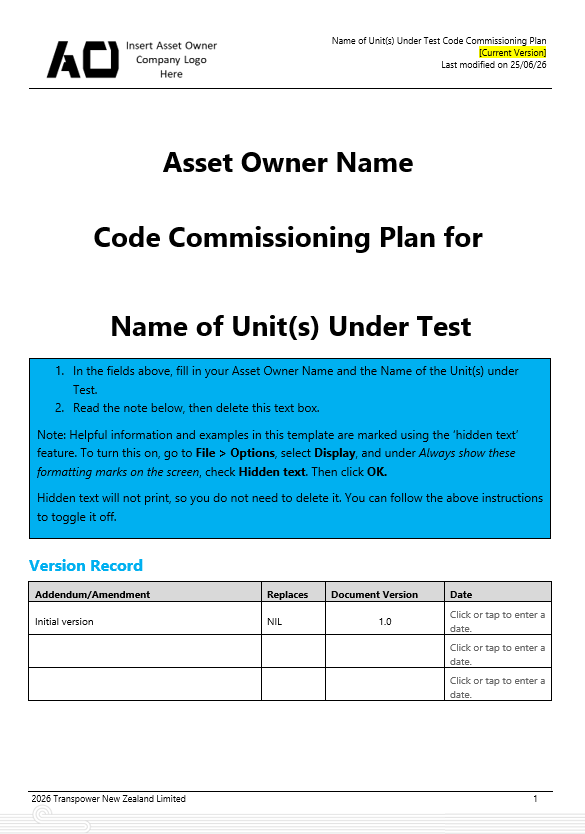
DT-EA-338 Code Commissioning Plan Template CACTIS-mandated template to use to structure your Code commissioning plan. UG-SD-961 ACS User Guide Defines the asset capability information required by the System Operator under the Code and provides guidance for asset owners and the System Operator users of the ACS application. Engineering Methodology
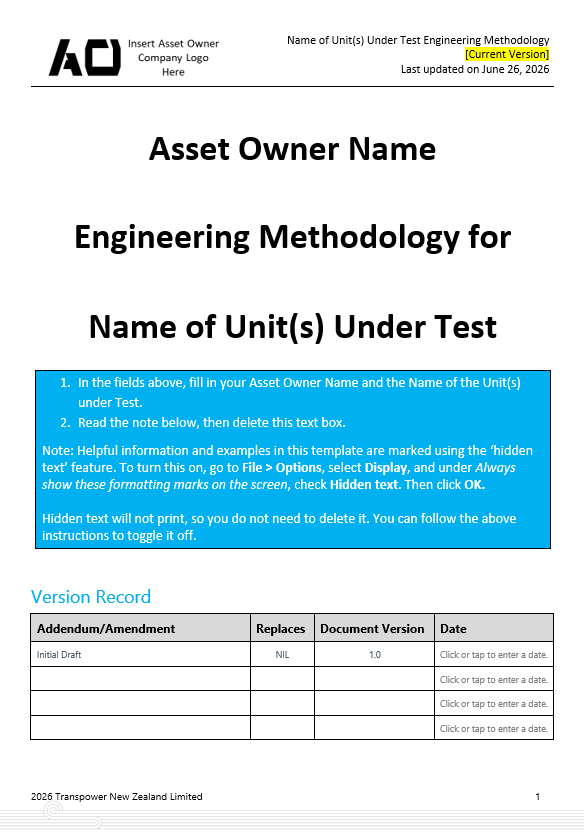
Deliverable Supporting Documents What is it for? Image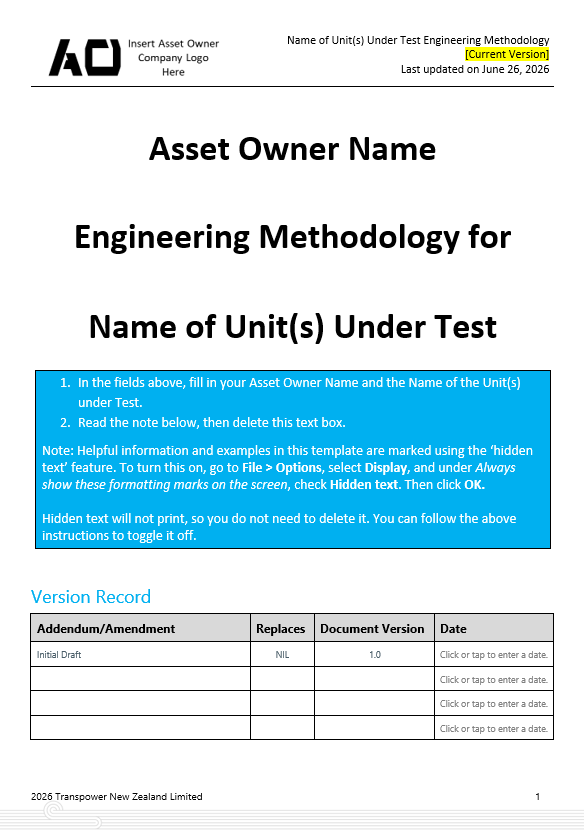
DT-EA-1337 Engineering Methodology Template Template to help you structure an engineering test methodology. GL-EA-010 Generator Testing Requirements Details requirements for demonstrating the performance and limitations of your generating asset through testing. GL-EA-1333 Ancillary Services Testing Requirements Details requirements for testing of generating and load assets for the purpose of ancillary service provision. Connection Study Report and M1 Model
Supporting Document What is it for? GL-EA-953 Connection Study Requirements Details the technical studies needed to demonstrate your asset can meet your AOPOs (Asset Owner Performance Obligations). GL-EA-716 Modelling Requirements for Synchronous Assets Details the requirements for developing and submitting mathematical models of synchronous assets - you must validate these in closeout. This applies to synchronous generating units and synchronous condensers. GL-EA-1311 Modelling Requirements for Inverter-based Resources Details the requirements for developing and submitting mathematical models of inverter-based resources - you must validate these in closeout. This applies to assets drawing power from wind, solar, batteries, and doubly-fed induction generators. New Zealand Grid Zone Map Map showing power stations, substations and grid zone boundaries across New Zealand. Offers and Dispatch Setup
Supporting Document What is it for? Generation Dispatch and Offers Webpage providing information about setting up offer and dispatch systems. GL-SD-1045 Market Dispatch Integration - ICCP and Web Services Guideline Provides detail about Web Services and ICCP interfaces for market dispatch. UG-SD-785 Web Service Dispatch Simulator User Guide This is the user guide for the Web Services Dispatch Simulator (“the Simulator”). The Simulator is provided for testing of participants’ Web Services dispatch interfaces. FM-EA-008 Generator Notice of Initial Offer Form to notify the System Operator of your intention to offer electricity to the market. FM-EA-006 Notice of intention to Connect Form to register your intent to connect your asset to the power system. Operational Test Plans
Supporting Document What is it for? PR-EA-010 Planned and Urgent Asset Testing Describes how your test plans are managed within the System Operator. FM-EA-010 Test Plan Template for providing the System Operator with details of specific tests to be conducted during commissioning. - Commissioning
The commissioning phase is when you connect your asset to the power system and test its performance to demonstrate you meet Code obligations. Your role is to follow all agreed Code commissioning documents, while our role is to assess your results and manage risk for the duration of testing.
You should perform all tests during the commissioning period as agreed in your Code commissioning plan and other compliance documents.
Document What is it for? FM-EA-010 Test Plan Template for providing the System Operator with details of specific tests to be conducted during commissioning. - Closeout
The closeout phase is when sufficient testing has been done to call an end to the Code Commissioning Period. Your role is to support the transition by providing all test results and updated models for validation, then submitting your commissioning checksheet for System Operator review. You then maintain the responsibility to meet all Code obligations going forward, until you decommission the asset. The System Operator’s role is to undergo a compliance check and verify that your asset does not add any risk to the New Zealand power system beyond the end of the commissioning period.
The key deliverables for this phase are the submission of a final ACS, final test reports and data, a validated power system M2 model, and a completed final compliance checksheet.
Document What is it for? GL-EA-716 Modelling Requirements for Synchronous Assets Details the requirements for developing and submitting mathematical models of synchronous assets - you must validate these in closeout. This applies to synchronous generating units and synchronous condensers. GL-EA-1311 Modelling Requirements for Inverter-based Resources Details the requirements for developing and submitting mathematical models of inverter-based resources - you must validate these in closeout. This applies to assets drawing power from wind, solar, batteries, and doubly-fed induction generators. UG-SD-961 ACS User Guide Defines the asset capability information required by the System Operator under the Code and provides guidance for asset owners and the System Operator users of the ACS application. CL-EA-1147 Final Compliance Checksheet Spreadsheet that lists the Code obligations that your asset must comply with and provides space for evidence that demonstrates compliance.
If you have questions about the process, we have compiled a series of frequently asked questions and answers based on what previous Asset Owners have enquired about. If none of our sources answer your questions, please reach out to [email protected].
Decommissioning
Once a generating asset reaches the end of its design life, or when it needs to be retired due to compliance requirements or financial unviability, you need to engage with the System Operator's decommissioning process. Fill out our decommissioning plan template (linked below) and reach out to us on [email protected].
| Document | What is it for? |
|---|---|
| DT-EA-389 Decommissioning Plan | Template to provide information to the System Operator in support of decommissioning an asset. |
Key Reminders
- Keep the Code and the CACTIS handy throughout the process. You are responsible for understanding your obligations and fulfilling them.
- Engage with the System Operator early throughout the process. We have many commissioning projects underway at any one time, so the more time and grace you give us with your requests, the better prepared we will be to support you.